
Executive Summary
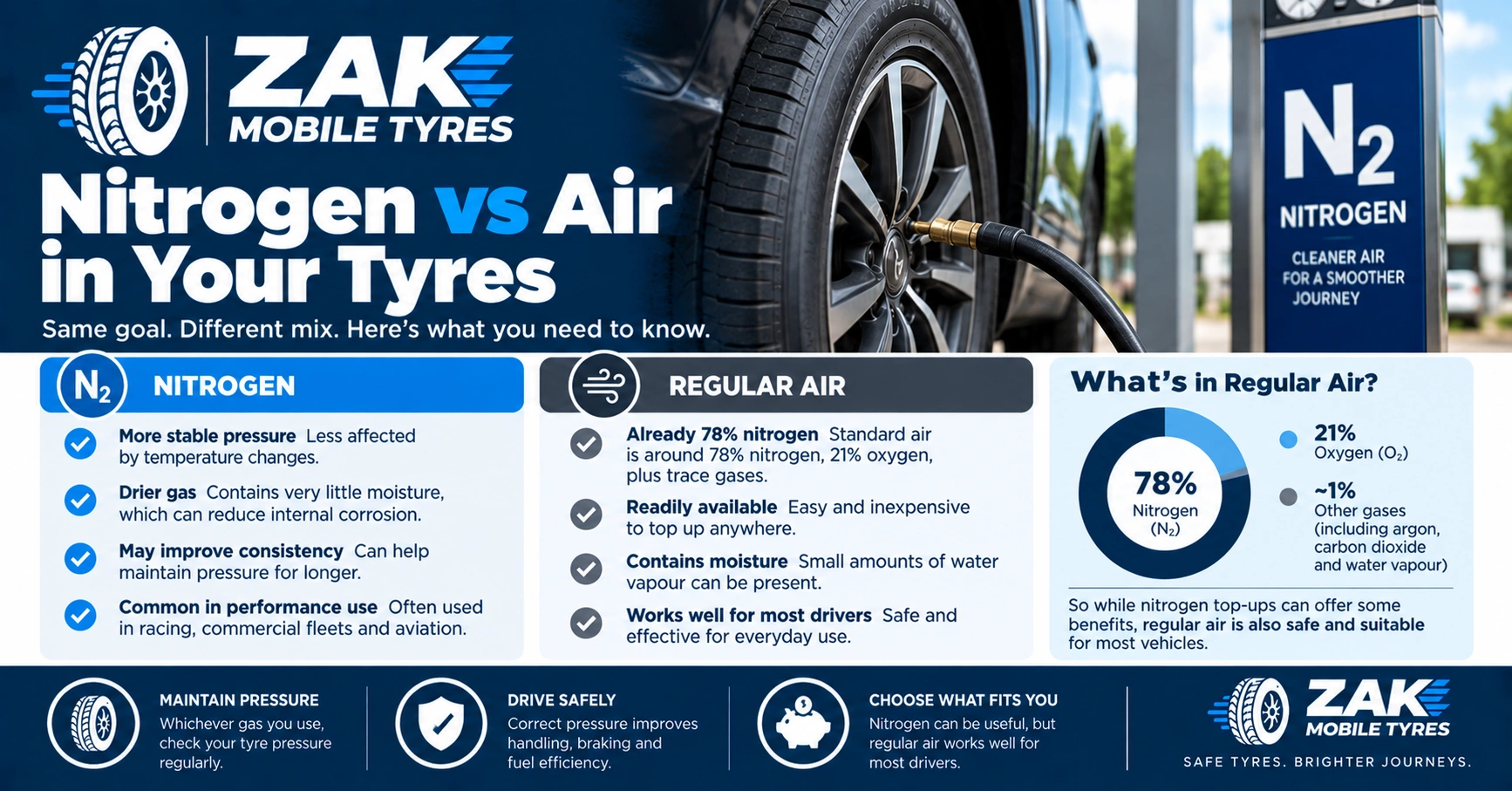
Nitrogen in tyres offers small, real but modest benefits over normal air: pressure stays a little more stable over time and with temperature, and there is slightly less moisture inside the tyre. But normal air is already 78 percent nitrogen, so the difference is smaller than it sounds, and for everyday drivers the advantages rarely justify the cost and inconvenience. What matters far more than what is in your tyres is simply keeping them at the correct pressure and checking them regularly.
Nitrogen makes most sense in specialist settings, motorsport, aviation, heavy commercial use, where precise, stable pressures genuinely matter. For a normal car, it is a nice-to-have at best, not something to pay a premium for or seek out.
This guide explains what nitrogen actually does, the genuine benefits and their limits, and why regular pressure checks with ordinary air serve most drivers perfectly well.
Disclaimer: General guidance. Whatever you fill your tyres with, follow your vehicle’s recommended pressures and check them regularly.
What Nitrogen Actually Does
The claims around nitrogen can sound impressive, so it helps to understand the actual science, which is real but modest.
Normal air is already about 78 percent nitrogen, with most of the rest oxygen. So filling with “nitrogen” really means filling with a higher purity of nitrogen, usually around 95 percent or more, rather than introducing something new. That framing alone tells you the difference is a matter of degree, not kind.
The genuine differences come down to two things. First, nitrogen molecules are slightly larger and less prone to seeping through the tyre than oxygen, so a nitrogen-filled tyre tends to lose pressure a little more slowly over weeks and months. Second, the oxygen in normal air carries some moisture and is more reactive, so nitrogen keeps the inside of the tyre slightly drier and less prone to oxidation of the wheel and valve over long periods.
Those are real effects. The question is whether they are big enough to matter to you, and for most drivers the honest answer is not really.
The Real Benefits, and Their Limits
Let us take the claimed benefits one by one, fairly.
More stable pressure over time. True, but modest. A nitrogen tyre loses pressure slightly more slowly, but all tyres lose some pressure, and you should be checking monthly anyway. If you check and top up regularly with normal air, you get correct pressures just the same. The benefit mainly helps people who never check, and the better fix for them is to start checking.
Less affected by temperature. Often claimed, and slightly true because dry nitrogen expands a little more predictably than moist air, but the effect for everyday road driving is small. Your pressures still change with the seasons and you should still adjust them.
Less moisture and oxidation inside. Real over the long term, and marginally helpful for wheel and valve longevity, but not something a typical driver would ever notice over a normal ownership period.
Better fuel economy and tyre life. These are sometimes claimed as knock-on effects of more stable pressure. Any benefit is indirect and small, and it comes from correct pressure, which you can achieve with air by checking regularly. Nitrogen is not a shortcut around basic maintenance.
The pattern is clear: the benefits are genuine but minor, and every one of them is largely matched by the simple habit of checking your pressures.
When Nitrogen Is Genuinely Worth It
There are settings where nitrogen earns its place, and it is worth knowing them so the everyday picture makes sense.
Motorsport. Racing teams use nitrogen because precise, predictable pressure as tyres heat up hugely affects grip and handling at the limit. At racing speeds and temperatures, the small advantages become significant.
Aviation. Aircraft tyres use nitrogen for safety reasons, including the absence of moisture and reduced fire risk at the extreme temperatures and pressures involved.
Heavy commercial and specialist use. Some large fleets and specialist operators use nitrogen where very stable pressures across heavy loads and long runs bring real efficiency, though many still use air perfectly well.
What these share is that pressure precision and stability genuinely matter at the margins, in a way they simply do not for a car on the school run. For a normal road car, you are not operating anywhere near the conditions where nitrogen’s advantages become meaningful.
What Actually Matters for Your Tyres
If you take one thing from this guide, make it this: what you put in your tyres matters far less than keeping them correctly inflated and in good condition.
Check your pressures regularly, at least monthly and before long trips, against your vehicle’s recommended figures. Correct pressure is the single biggest factor in tyre safety, wear and fuel economy, and it costs nothing. Underinflation is what causes uneven wear, poor grip and blowouts, whether the tyre is filled with air or nitrogen.
Top up with whatever is available. You can safely top up a nitrogen-filled tyre with normal air, it simply dilutes the nitrogen purity slightly, which is far better than driving on a low tyre while you hunt for a nitrogen supply. Do not let “but mine has nitrogen” become a reason to drive underinflated.
Watch condition, not just pressure. Tread depth, damage and age all matter more than the gas inside. Our guides on tyre tread depth and tyre age cover these.
Get the basics right with ordinary air and you are doing more for your tyres than nitrogen ever would. If a tyre is losing pressure faster than it should, that is usually a fault to fix, a valve or a slow puncture, which we can sort with a mobile puncture repair, not a reason to switch gas.
Frequently Asked Questions
Is nitrogen better than air in tyres?
Slightly, but only modestly. Nitrogen keeps pressure a little more stable and the tyre interior a little drier. But normal air is already 78 percent nitrogen, so the difference is small, and for everyday drivers it rarely justifies the cost. Regular pressure checks with ordinary air serve most cars just as well.
Is it worth paying for nitrogen in car tyres?
For most road drivers, no. The benefits are real but minor and are largely matched by simply checking your pressures regularly. Nitrogen genuinely matters in motorsport, aviation and some heavy commercial use, where precise, stable pressure is critical, but not for a normal car.
Can I put normal air in a tyre filled with nitrogen?
Yes, safely. Topping up a nitrogen-filled tyre with normal air just slightly reduces the nitrogen purity, which is far better than driving on an underinflated tyre. Never drive low on pressure because you are waiting to find a nitrogen supply; top up with air.
Does nitrogen improve fuel economy or tyre life?
Only indirectly and slightly, through more stable pressure, and you can get the same benefit by keeping your tyres correctly inflated with ordinary air. Nitrogen is not a shortcut around regular pressure checks, which remain the real driver of economy and tyre life.
What matters more than nitrogen for my tyres?
Correct pressure, checked regularly, plus good tread, no damage and reasonable age. These matter far more than what gas is inside. Underinflation causes uneven wear, poor grip and blowouts regardless of whether the tyre holds air or nitrogen, so regular checks are the priority.
Conclusion
Nitrogen versus air in tyres comes down to this: nitrogen offers small, genuine benefits in pressure stability and dryness, but since normal air is already mostly nitrogen, the difference is minor and rarely worth paying for on an everyday car. It earns its place in motorsport, aviation and specialist use, not on the school run.
What actually keeps your tyres safe is correct pressure, checked regularly, along with good tread, no damage and reasonable age. Get those right with ordinary air and you are well ahead. If a tyre keeps losing pressure, let us find the real cause with a mobile puncture repair across Glasgow, with no call-out fee.