
Executive Summary
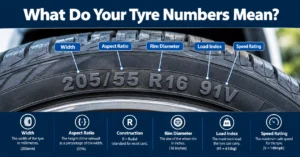
The numbers on your tyre sidewall are a code that tells you everything about that tyre’s size and capability. A typical example, 205/55 R16 91V, breaks down as: 205 is the width in millimetres, 55 is the profile or aspect ratio, R means radial construction, 16 is the wheel rim diameter in inches, 91 is the load index, and V is the speed rating.
Knowing how to read this matters for one practical reason: when you replace a tyre, the new one must match your car’s correct specification, or at least never fall below the load index and speed rating your vehicle requires. Fitting a lower-rated tyre to save money is unsafe and can be illegal.
The easiest way to get the right tyre is simply to read this code off your existing tyre, or send a photo of it, and let a fitter match it. This guide explains what every part means so you know exactly what you are looking at.
Disclaimer: Always match replacement tyres to the specification recommended for your vehicle, shown in your handbook or door pillar. If different tyres are fitted across an axle, or you are unsure, check with a qualified fitter.
The Code, Broken Down
Take our example: 205/55 R16 91V. Every character has a job.
205, the width. This is the width of the tyre in millimetres, from sidewall to sidewall. A bigger number means a wider tyre. Here, 205mm.
55, the profile (aspect ratio). This is the height of the sidewall as a percentage of the width. So a 55 profile means the sidewall height is 55 percent of 205mm. A lower number means a shorter, sportier sidewall; a higher number means a taller, more cushioned one.
R, the construction. R stands for radial, which is how almost all modern car tyres are built. You will nearly always see an R here.
16, the rim diameter. This is the diameter of the wheel the tyre fits, in inches. It must match your wheel exactly, a 16 inch tyre goes on a 16 inch wheel, never anything else.
91, the load index. A coded number for the maximum weight the tyre can carry. Higher means stronger. This must meet or exceed what your car requires, which matters a great deal, covered below.
V, the speed rating. A letter for the maximum speed the tyre is rated for. Like the load index, it must meet or exceed your car’s requirement.
Load Index and Speed Rating: The Two That Really Matter
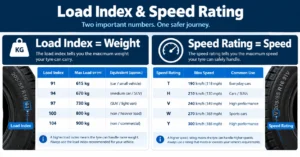
Width, profile and rim size have to match your wheel, that part is obvious. But the load index and speed rating are where drivers get caught out, and they are the two that carry a safety and legal weight.
The load index tells you how much weight each tyre can safely carry. Your car’s handbook and the plate on the door pillar specify a minimum. Fitting a tyre with a lower load index than your car needs means the tyre is not built to carry the vehicle’s weight, which is dangerous and can fail an inspection. This matters especially on vans and heavier vehicles, which is why our van and fleet tyre fitting always matches or exceeds the required rating.
The speed rating works the same way. It is the maximum speed the tyre is designed to sustain safely. You should never fit a tyre rated below your car’s specification. Fitting a higher rating is generally fine; fitting a lower one is not.
The simple rule: never go below the load index or speed rating your vehicle calls for. When we supply a tyre, matching these correctly is part of getting it right, which is why we always confirm your exact specification before fitting.
Where to Find Your Tyre Size
You have three easy places to look.
On the tyre itself. The code is moulded into the sidewall, as in our example. This is the quickest check, though remember it tells you what is currently fitted, which is not always what the car should have if someone fitted the wrong size before.
In the handbook. Your car’s manual lists the correct tyre sizes for your vehicle, which is the authoritative source.
On the door pillar or fuel flap. Most cars have a sticker, usually on the driver’s door pillar, showing the recommended tyre sizes and pressures. This is the manufacturer’s specification and the one to trust.
If the tyre currently on the car does not match the handbook or door pillar, that is worth flagging, because someone may have fitted the wrong size previously.
Other Markings You Might See
Beyond the main size code, a few other markings are worth knowing.
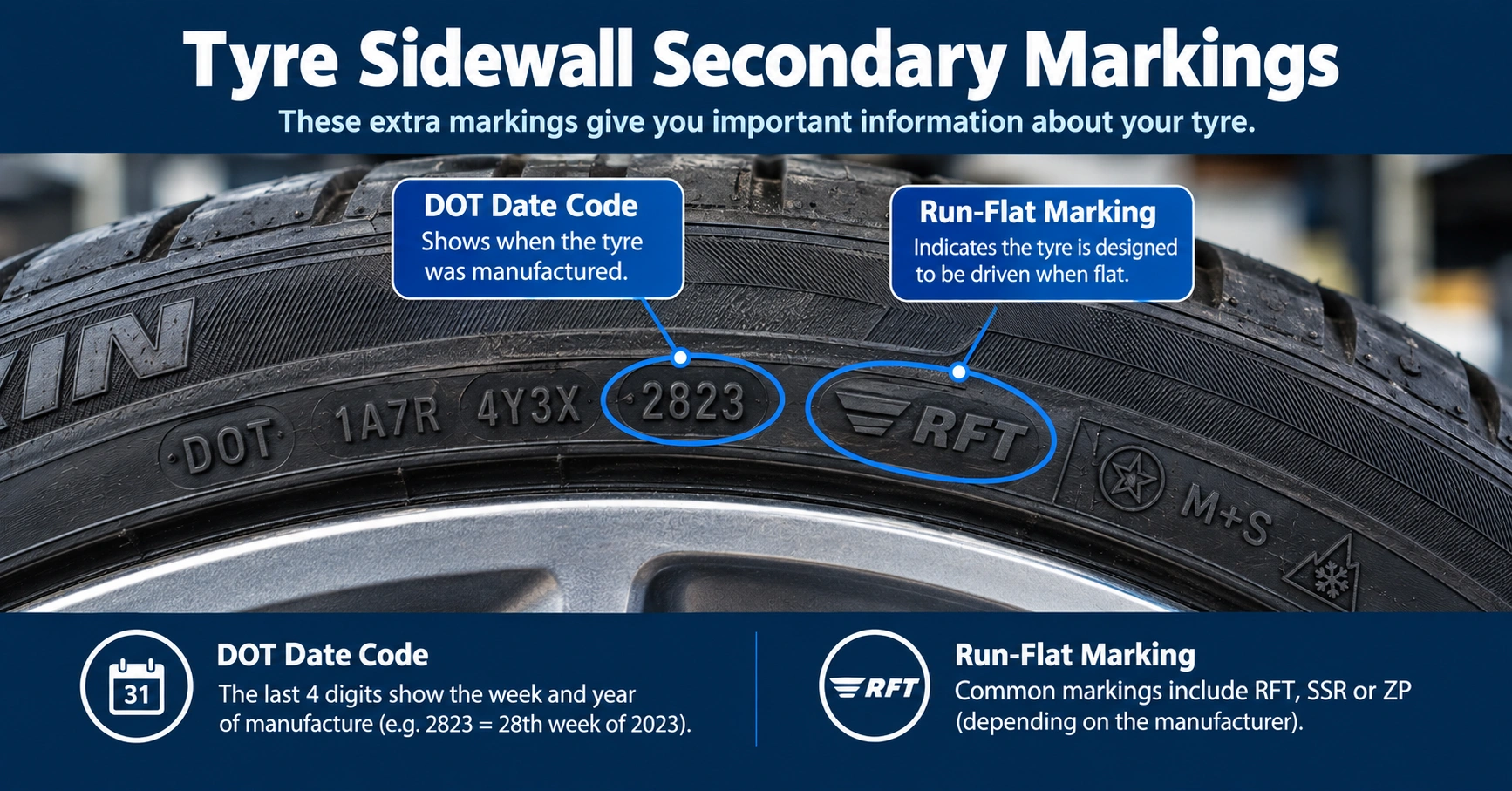
The DOT code and date stamp. A four-digit number tells you the week and year the tyre was made. For example, 3623 means the 36th week of 2023. Tyres age even with little use, so a very old date on a tyre with plenty of tread is still worth noting.
Run flat markings. Letters such as RSC, ROF, RFT or similar indicate a run-flat tyre. If your car runs these, replacements should generally match, which our run-flat tyre fitting page explains.
M+S, the snowflake symbol. These indicate mud and snow or proper winter capability, relevant for Scottish winters.
XL. Stands for extra load, a reinforced tyre for higher loads, common on heavier cars.
You do not need to decode all of these yourself. But knowing they exist helps you understand what a fitter is talking about, and helps you spot if something does not match.
Why This Matters When You Replace a Tyre
Reading your sidewall is not just trivia. It is the single most useful thing you can do to get a replacement right.
When you know your size, you can get an accurate quote instantly rather than a vague range, you can check that a fitter is quoting for the correct tyre, and you can be sure the replacement matches your car’s load and speed requirements. It removes the guesswork.
In practice, the easiest approach is the simplest: read the code off your sidewall, or take a photo of it, and send it over. From that we can bring exactly the right tyre for your car. Our mobile tyre fitting and car tyre replacement both start from that one piece of information.
Frequently Asked Questions
What do the numbers on my tyre mean? They are a size and capability code. In 205/55 R16 91V, the 205 is the width in millimetres, 55 is the sidewall height as a percentage of the width, R is radial construction, 16 is the wheel diameter in inches, 91 is the load index (weight capacity) and V is the speed rating. Together they define the correct tyre for your car.
Where do I find my tyre size? In three places: moulded into the tyre sidewall itself, in your car’s handbook, and on the sticker usually found on the driver’s door pillar or fuel flap. The door pillar and handbook show the manufacturer’s recommended size, which is the one to trust if the fitted tyre differs.
What is the load index and why does it matter? The load index is a number for the maximum weight the tyre can safely carry. Your car specifies a minimum, and fitting a tyre below it is unsafe and can be illegal, because the tyre is not built to carry the vehicle’s weight. Always match or exceed the load index your vehicle requires.
Can I fit a different size tyre than my car came with? You should fit the size specified for your vehicle, shown in the handbook or on the door pillar. You must never go below the required load index or speed rating. Changing sizes can affect handling, the speedometer and legality, so it should only be done on proper advice from a fitter.
What does the speed rating letter mean? It is the maximum speed the tyre is designed to sustain safely, shown as a letter such as V or W. You should never fit a tyre rated below your car’s specification. A higher rating than required is generally fine, but a lower one is not safe or legal.
Conclusion
The numbers on your tyre are simply a code for its size and capability: width, profile, construction, rim diameter, load index and speed rating. The two that matter most for safety are the load index and speed rating, which must never fall below what your car requires. Everything else has to match your wheel.
The practical takeaway is easy: find the code on your sidewall or send us a photo, and we will match the exact tyre your car needs. Our mobile tyre fitting brings the right tyre to your door across Glasgow, with no call-out fee.