
Executive Summary
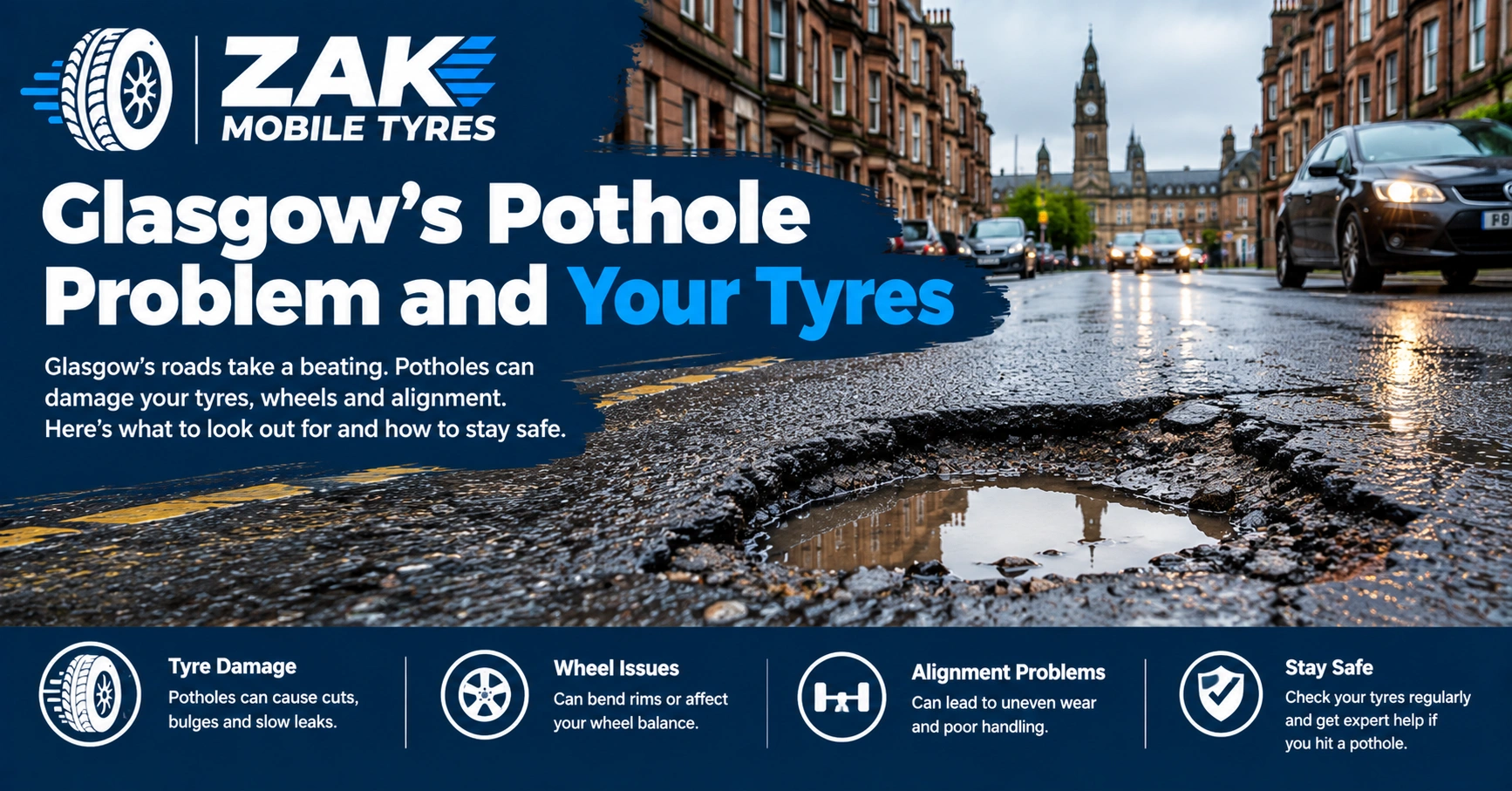
Potholes are one of the most common causes of tyre and wheel damage in Glasgow, and the city’s mix of old tenement streets, freeze-thaw winters and heavy traffic makes them a persistent problem. A hard pothole strike can cause an instant blowout, a slow puncture, a bulge in the sidewall, a buckled alloy, or knock your wheel alignment out, and often you will not know the full extent until you have it checked.
If you hit a bad pothole, slow down safely, check for immediate signs like pulling or vibration, and have the tyre and wheel inspected. Damage to the sidewall or a bulge means the tyre must be replaced. You may also be able to claim the cost from the council if the pothole was a known defect.
This guide explains how pothole damage happens, the warning signs, how to protect your tyres, and what to do, including claiming, when the damage is done.
Disclaimer: General guidance for Glasgow drivers. Council claim processes and outcomes vary and are not guaranteed. Have any suspected damage checked by a qualified technician.
Why Glasgow Is Hard on Tyres
Glasgow’s roads are tough on tyres for reasons built into the city itself.
Freeze-thaw winters. Water seeps into cracks in the road, freezes and expands, then thaws, breaking the surface apart. Scotland’s repeated freezing and thawing through winter is a pothole factory, which is why potholes multiply from late winter into spring.
Old road surfaces. Much of Glasgow, especially the tenement streets of the Southside, East End and West End, sits on older road surfaces that crack and sink over time. Sunken drain covers and patched repairs add sharp edges that punish tyres.
Heavy, constant traffic. Busy arterial routes and bus corridors take relentless pounding, which accelerates surface breakup. Kerbing on tightly parked streets adds sidewall damage on top of the pothole problem.
The result is that Glasgow drivers hit more tyre-threatening road defects than drivers in many other places, and pothole and impact damage is one of the most frequent jobs we attend. It is not bad luck, it is the roads.
What a Pothole Actually Does to Your Tyre
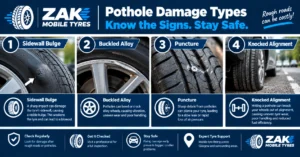
Hitting a pothole hard can cause several kinds of damage, some obvious, some hidden.
Instant blowout or puncture. A sharp edge can slice or puncture the tyre on impact, causing an immediate flat.
Sidewall bulge. This is the classic pothole injury. The impact pinches the tyre against the wheel rim and damages the internal structure of the sidewall, which then bulges outward. A bulge means the tyre must be replaced, it cannot be repaired, and it can fail suddenly.
Buckled or cracked alloy. The wheel itself can bend or crack on a hard hit, which causes vibration and slow air loss and may need the wheel repaired or replaced, not just the tyre.
Knocked alignment. Even without visible tyre damage, a pothole can knock your wheel alignment out, which then wears your tyres unevenly over the following weeks. If the car pulls to one side after a pothole, get the alignment checked, our wheel alignment page explains the signs.
Slow, hidden damage. Sometimes the tyre seems fine but develops a slow leak or weakness that shows up days later. This is why a check after a serious impact is worth it.
How to Protect Your Tyres
You cannot fix Glasgow’s roads, but you can reduce the damage they do.
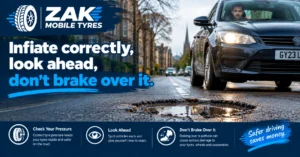
Keep your tyres properly inflated. Correct pressure gives the tyre its best chance of absorbing an impact without the sidewall pinching against the rim. Underinflated tyres are far more vulnerable to pothole damage, which is another reason to act on a tyre pressure warning light.
Leave space and look ahead. Potholes are hardest to avoid when you are close behind another vehicle and cannot see the road surface. Leaving room lets you spot and steer around defects in time.
Slow down where you know the roads are bad, particularly on older streets and after winter. Speed multiplies the force of an impact.
If you cannot avoid one, do not brake hard over it. Braking pitches the car’s weight forward onto the front tyres at the moment of impact, making damage worse. Slow before it, then ease off as you cross.
Check your tyres regularly, especially through the late-winter pothole season, so you catch damage early. Healthy tread and good condition also help a tyre survive an impact.
What to Do If a Pothole Damages Your Tyre
Two things: get it sorted, and consider a claim.
Get it checked and fixed. If you have a bulge, a cut or a fully flat tyre, it needs replacing, and we can bring a car tyre replacement to you. If it is a tread puncture, it may be repairable. If the car pulls or vibrates, get the alignment and wheel checked too.
Consider claiming from the council. If the pothole was on a public road and was a known or reportable defect, you may be able to claim the repair cost from the local council. Note the exact location, photograph the pothole and the damage, keep your repair receipt, and report it. Success is not guaranteed and depends on whether the council had a reasonable chance to fix it, but for significant damage it is worth pursuing. Reporting the pothole also helps get it fixed for everyone.
Whatever the outcome of a claim, do not keep driving on a pothole-damaged tyre with a bulge or cut, it can fail without warning.
Frequently Asked Questions
Can a pothole really damage my tyre?
Yes, and it is one of the most common causes of tyre damage in Glasgow. A hard pothole strike can cause an instant puncture or blowout, a sidewall bulge, a buckled alloy wheel, or knock your alignment out. Some damage is immediate and obvious, some develops over the following days.
What does pothole damage to a tyre look like?
The classic sign is a bulge in the sidewall, where the impact has damaged the internal structure. You might also see a cut, have a flat or slow puncture, feel vibration from a buckled wheel, or notice the car pulling to one side from knocked alignment. Any bulge means the tyre must be replaced.
Can I claim for pothole tyre damage in Glasgow?
Possibly. If the pothole was on a public road and a reportable defect the council had a reasonable chance to fix, you may claim the repair cost. Photograph the pothole and damage, note the location, keep receipts and report it. Outcomes are not guaranteed and depend on the circumstances.
Should I get my alignment checked after hitting a pothole?
Yes, if the car pulls to one side, the steering feels off-centre, or you hit the pothole hard. A pothole can knock your wheel alignment out even without visible tyre damage, and poor alignment then wears your tyres unevenly over the following weeks.
Can a pothole-damaged tyre be repaired?
Only if the damage is a puncture in the central tread. A sidewall bulge or cut from a pothole cannot be repaired and means the tyre must be replaced, because the internal structure is damaged and could fail suddenly. Have it inspected to know which applies.
Conclusion
Pothole tyre damage is a fact of driving in Glasgow, thanks to freeze-thaw winters, old surfaces and heavy traffic. A hard strike can cause a blowout, a sidewall bulge, a buckled alloy or knocked alignment, and a bulge or cut means the tyre must be replaced. Proper inflation, looking ahead, slowing on bad roads and not braking over the pothole all reduce the damage.
If a pothole has caught you out, we can help fast. Our car tyre replacement and alignment checks come to you across Glasgow, with no call-out fee. And do consider reporting and claiming, it helps your pocket and the next driver.