
Executive Summary
A lost locking wheel nut key is one of those small problems that suddenly becomes a big one. You need a tyre changed, repaired or rotated, and one nut on every wheel will not budge. Without the key, the wheel simply cannot come off, and the wrong approach can wreck the nut, the wheel stud and an expensive alloy wheel.
This article explains what locking wheel nuts are, where the key is most likely hiding, how to get a replacement, why you should never force a locking nut, and how a mobile tyre specialist removes one safely at your home or workplace in Glasgow.
What Is a Locking Wheel Nut?
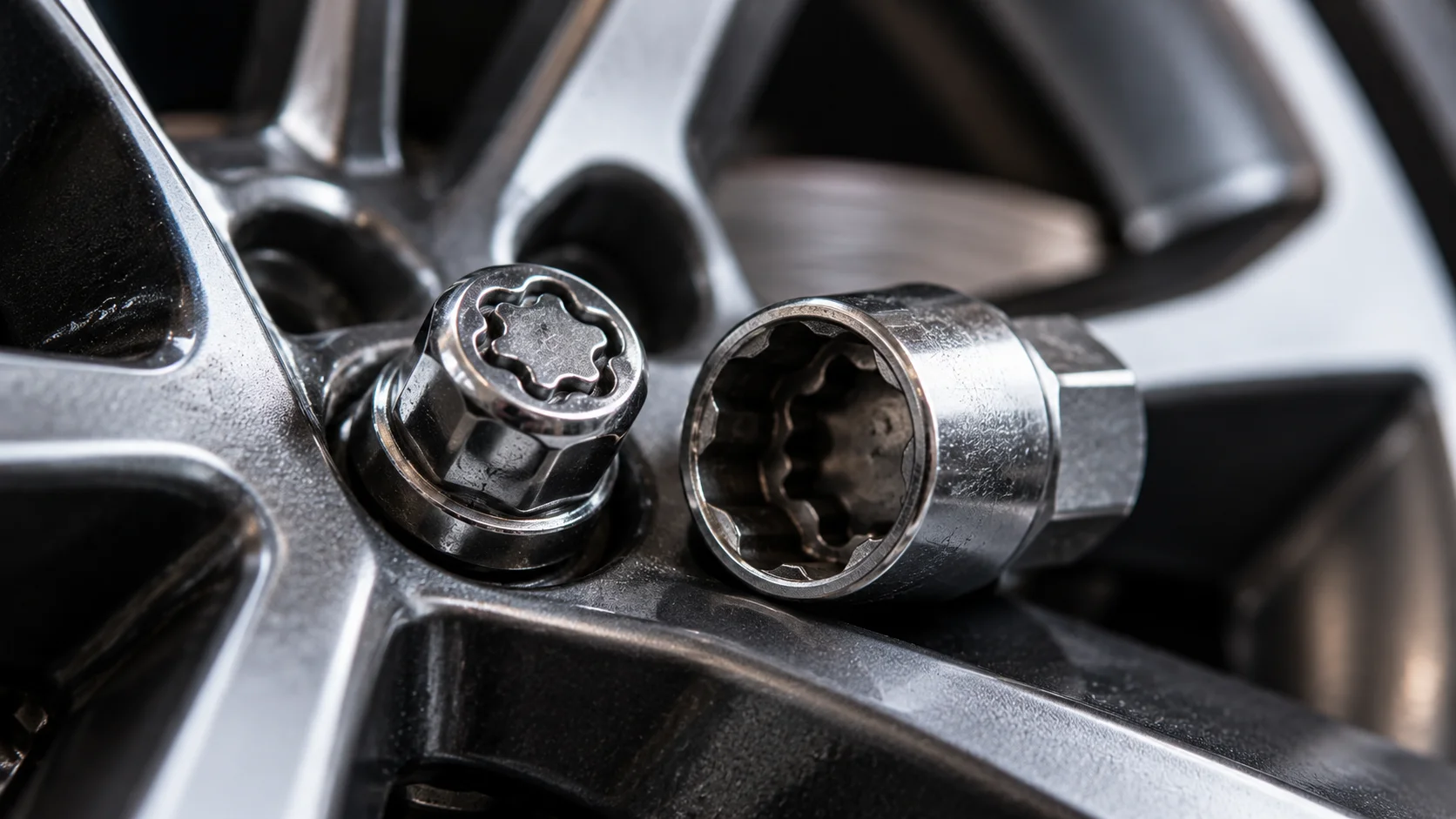
A locking wheel nut is a special nut, usually one per wheel, that replaces one of the standard wheel nuts. It has a unique pattern on its head that only fits one matching key. Its job is to deter wheel theft, because a thief cannot simply remove the wheel with an ordinary wrench. Alloy wheels and larger tyres are costly, so many manufacturers fit locking nuts as standard, and many owners add them as an extra.
The key is the only tool that fits that pattern. If it goes missing, the same security that protects your wheels now stops you from servicing them.
Why You Need the Key
You need the key every time a wheel comes off. That includes:
- Replacing a tyre, whether planned or after a failure.
- Repairing a puncture, where the tyre needs to be removed to be inspected and repaired from the inside.
- Seasonal tyre changes, such as swapping to winter tyres.
- Brake work and servicing.
- Changing a wheel at the roadside.
If you break down with a flat and no key, even a spare wheel in the boot cannot help you.
Step 1: Check the Usual Hiding Places
Before you worry, search properly. The key is almost always somewhere in the car. Check:
- The glove box. The most common storage spot.
- The boot tool kit, alongside the jack and wheel brace.
- The spare wheel well or under the boot floor.
- Door pockets and the centre console.
- Under the seats and in any underfloor storage compartments.
- Your owner’s manual, which will confirm exactly where your manufacturer puts it.
If you have recently bought the car second-hand, the previous owner may still have the key, or it may have been left in a drawer at home.
Step 2: Look for the Key Code
Many locking wheel nut kits come with a code card or a code stamped on the key. This code identifies the exact pattern. If you still have the paperwork from when the car was bought, or the original packaging for aftermarket nuts, look for a card with a short string of letters and numbers.
With the code, you can often order a replacement key from the manufacturer or a dealer. They may ask for proof that the car is yours. This route works well when you are not in a hurry, but delivery can take days.
Step 3: Do Not Force It
This is the most important advice in the whole article. When the key is missing, people are tempted to grab a hammer, an ill-fitting socket or a pair of grips and just try to wrench the nut off. Please do not.
Forcing a locking nut can:
- Round off or shear the nut, making it far harder to remove.
- Damage the wheel stud, which then needs repairing.
- Scratch or crack an alloy wheel.
- Injure you, if a tool slips under pressure.
- Make the eventual removal more expensive than it would have been.
A locking nut is built to resist tampering. That is exactly why it needs the right tool or the right technique.
Step 4: Call a Specialist to Remove It
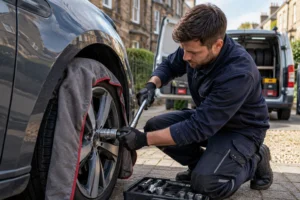
If you cannot find the key and a replacement would take too long, the safest option is professional locking wheel nut removal. Trained technicians use specialist extractor tools, designed to grip the nut securely and turn it without harming the wheel. In most cases the nut can be removed in minutes, then the wheel is taken off normally and the job you originally needed can go ahead.
The big advantage of using a mobile service is that you do not need to get the vehicle anywhere. We attend your home, workplace or roadside across Glasgow and Central Scotland. Our locking wheel nut removal service means a technician arrives with the tools, removes the nut and, if you need it, fits the new tyre in the same visit through our mobile tyre fitting or mobile tyre replacement services.
Reputable fitters will want to be sure the vehicle belongs to the person asking for the work, so have your registration and some form of identification to hand.
What Happens After the Nut Is Removed?
If the removal tool destroys the old locking nut, which it often does, you will need a replacement. You then have two choices:
- Fit a new locking set. This gives you a fresh key. Store it somewhere safe and keep the code card with your car documents.
- Fit standard nuts. Perfectly acceptable if you would rather not have the hassle, though you lose the theft protection.
Either way, the wheel nuts must be tightened to the manufacturer’s recommended torque, and checked, so the wheel is secure. Properly torqued nuts are a basic safety requirement.
How to Never Lose Your Key Again
A few simple habits will save you the stress next time:
- Keep it in one fixed place every time, such as the glove box or the tool roll with the jack.
- Photograph the code card and save it to your phone or cloud storage.
- Tell everyone who uses the car where the key lives.
- Do not leave it loose in a door pocket, where it can slip behind trims.
- Hand it over when you sell the car. It is part of the car, and the new owner will need it.
- Tell your fitter you have locking nuts before an appointment, so they bring the right tools.
Locking Wheel Nuts and Other Tyre Jobs
Locking nuts often come up alongside other tyre problems, so it helps to know how they connect:
- If you have a puncture and the key is missing, our mobile puncture repair technicians can remove the nut as part of the job.
- If you are stranded, our roadside tyre assistance and 24/7 emergency mobile tyre service can deal with a locked wheel at the side of the road. Never try to change a wheel yourself on a fast road, as our guide on changing a tyre on the motorway explains.
- If you are swapping seasons, our winter and seasonal tyre change service can handle the locking nuts at the same time.
- If you own a run-flat equipped car, read about run-flat tyre fitting too, as these cars often have locking nuts fitted as standard.
- Need new tyres at the same time? Call us for a free instant quote. Our prices are fully fitted, with no call-out fee.
Where We Help
We remove locking wheel nuts and fit tyres across Glasgow and Central Scotland, including Springburn, Govan, Castlemilk, Hamilton, Motherwell, East Kilbride, Lanark, Strathaven, Cumbernauld and Bearsden. For a general overview of tyre sizes, tread depth and pressures, visit our tyre information page.
Disclaimer
This article is general information only. Procedures differ between vehicles and wheel types. We do not recommend attempting to remove a locking wheel nut with improvised tools, and nothing here is a substitute for work by a trained technician. Always follow your vehicle manufacturer’s guidance.
Frequently Asked Questions
What do I do if I have lost my locking wheel nut key?
First check the usual hiding places: the glove box, the boot tool kit, the spare wheel well and under the boot floor. If it is not there, you can try to get a replacement key using the code from your vehicle documents, or ask a mobile tyre specialist to remove the locking nut with specialist tools.
Can a locking wheel nut be removed without the key?
Yes. Trained technicians use specialist removal tools designed to grip and remove the nut without damaging the wheel. It should not be attempted with improvised tools, as this can ruin the nut, the stud and the alloy wheel.
Where is the locking wheel nut key usually kept?
Most commonly in the glove box or the boot, either with the spare wheel and jack or in the vehicle tool kit. Some vehicles keep it in a door pocket or under the boot floor. Your owner’s manual will confirm the location.
Can I get a replacement locking wheel nut key?
Often yes. Many keys carry a code, and the code card or documents from when the car was bought can be used to order a replacement. A dealer or the key manufacturer may ask for proof of ownership.
Do I have to replace locking wheel nuts after removal?
If the old nut was destroyed in removal it must be replaced. You can choose a new locking set, which gives you a fresh key to keep somewhere safe, or fit standard nuts if you prefer.
Conclusion
A lost locking wheel nut key does not have to ruin your day. Search the usual spots, look for the code card, resist the urge to force the nut, and call a professional who has the right tools. A quick, careful removal protects your alloy wheels and gets you back on the road, usually without ever leaving your driveway.
Locked out of your own wheels? Call 07553 352305 and our mobile technicians will come to you across Glasgow and Central Scotland, day or night, with no call-out fee. Or contact us online for a free quote.