
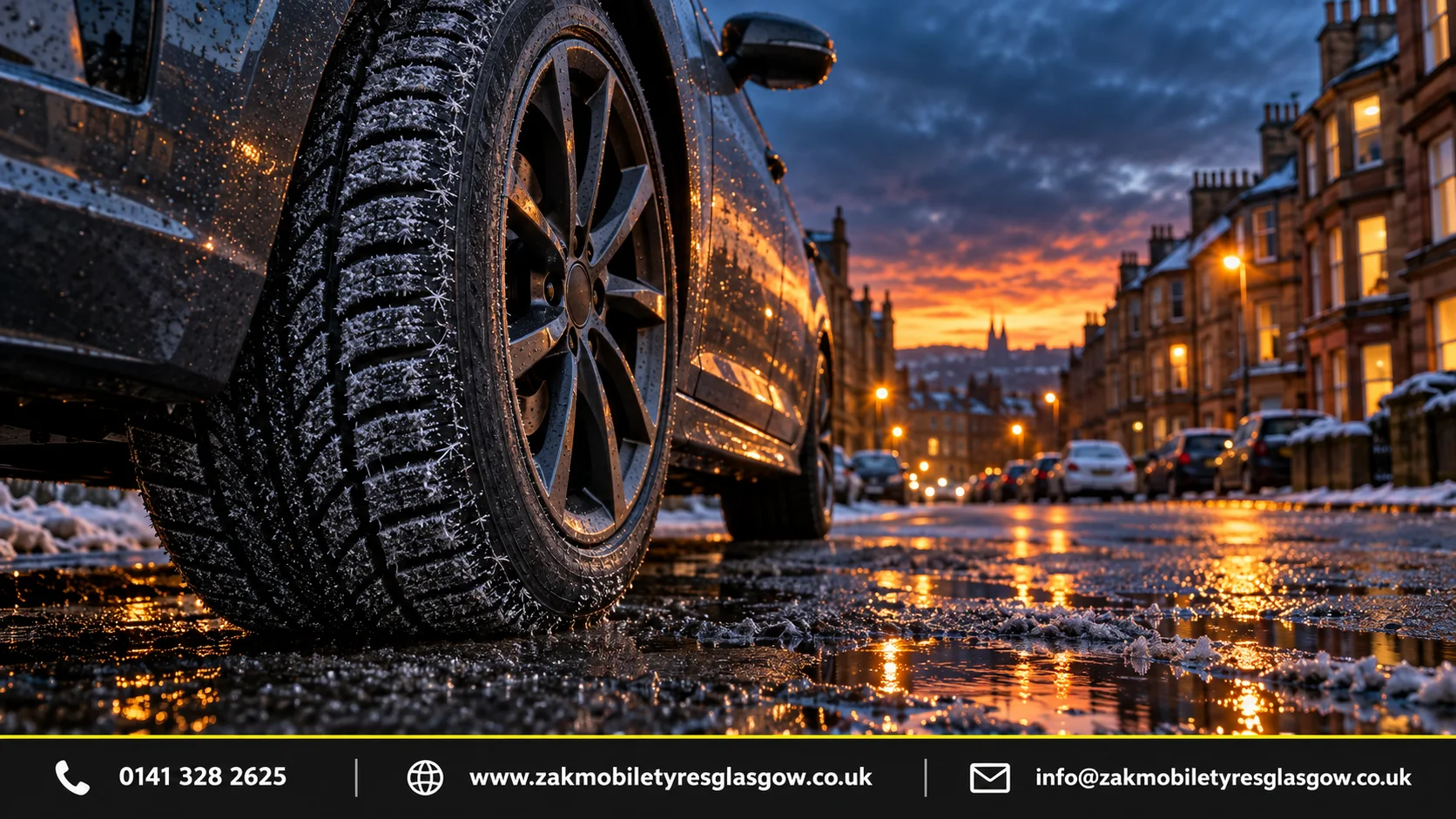
Winter Tyre Checks: A 7-Step Guide for Glasgow and Central Scotland Drivers
Scottish winters arrive fast. One week the roads are dry and mild, the next you are scraping frost off the windscreen at 7am and driving home in the dark through standing water. Your tyres are the only part of your car that touches the road, and cold weather changes the way they behave. That is why a few simple winter tyre checks in October or early November can make a real difference to your safety.
Winter Tyre Checks: Quick Summary
This guide walks you through seven checks every Glasgow driver can do at home in under 15 minutes. It also explains how cold weather affects tyre pressure, what tread depth you really need for winter, whether winter tyres are worth it in Scotland, and when it makes sense to have a professional take a look. If anything you find worries you, our mobile fitters can come to your home or workplace anywhere in Glasgow and Central Scotland.
Why Winter Is Harder on Your Tyres in Scotland
Most standard tyres sold in the UK are summer tyres. Their rubber compound is designed to work best in warmer conditions. Once the temperature drops below around 7°C, that rubber starts to stiffen. A stiffer tyre grips the road less effectively, which means longer stopping distances on exactly the cold, wet roads where you need grip the most.
Winter also brings a combination of hazards that put extra stress on tyres:
- Cold air lowers tyre pressure. Underinflated tyres wear faster, grip less and are more likely to be damaged.
- Heavy rain and standing water. Worn tread cannot clear water quickly, increasing the risk of aquaplaning.
- Frost, ice and occasional snow. Especially on higher ground, rural lanes and untreated side streets.
- Potholes. The freeze-thaw cycle breaks up road surfaces, and a hard pothole strike can damage a tyre from the inside. Read our guide to pothole tyre damage in Glasgow for the warning signs.
- Shorter daylight hours. It is harder to spot hazards and harder to check your car in the dark.
None of this means you need to panic. It simply means your tyres deserve a little more attention before winter properly sets in.
7 Winter Tyre Checks Every Glasgow Driver Should Do
1. Check Your Tread Depth (Legal Limit and 20p Test)
Tread depth is the single most important winter check. The grooves in your tyre push water away from the contact patch so the rubber can grip the road. As the tread wears down, that ability drops sharply.
The legal minimum tread depth for cars in the UK is 1.6mm across the central three quarters of the tyre, around its entire circumference. Driving below that limit can mean a fine of up to £2,500 and three penalty points per tyre. However, most tyre professionals recommend replacing tyres at 3mm for winter driving, because stopping distances on wet roads increase noticeably below that point.
The easiest home check is the 20p test. Place a 20p coin into the main tread grooves at several points around the tyre. If you can see the outer band of the coin, your tread may be getting too low and the tyre should be checked properly. Our tyre information page explains the 20p test in more detail.
If your tread is close to the limit, do not wait for the first icy morning. Our mobile tyre replacement service can supply and fit new tyres on your driveway.
2. Check Tyre Pressure in Cold Weather
Cold weather causes the air inside your tyres to contract, so pressure naturally drops as temperatures fall. As a rough guide, tyres lose around 1 PSI for every 5 to 6°C drop in temperature. A tyre set correctly on a mild September afternoon can be noticeably underinflated on a frosty November morning.
Check your pressures at least once a month through winter, and always when the tyres are cold, ideally before you have driven more than a mile or two. You will find the correct pressures in your owner’s manual, inside the driver’s door frame or on the fuel filler flap.
If your tyre pressure warning light comes on during a cold snap, do not ignore it. It may simply be the temperature, but it can also be a slow puncture. If a tyre keeps losing air after you top it up, our mobile puncture repair team can inspect and repair it on the spot where it is safe and legal to do so.
3. Inspect the Sidewalls for Bulges, Cuts and Cracks
Walk around your car and look closely at the sidewall of each tyre, the smooth outer wall between the tread and the wheel. You are looking for:
- Bulges or bubbles, usually caused by a pothole or kerb strike breaking the internal cords
- Cuts, splits or tears in the rubber
- Fine cracking, which is a sign of ageing rubber
A sidewall bulge is dangerous because the tyre can fail suddenly at speed, and sidewall damage cannot be repaired. Not sure whether what you are looking at is safe? Use our free Tyre Checker to help you decide.
4. Look for Uneven Tyre Wear
While you are checking the tread, compare the inner edge, the centre and the outer edge of each tyre. Even wear across the width is what you want. Uneven wear tells a story:
- Both edges worn more than the centre: the tyre has been running underinflated.
- Centre worn more than the edges: the tyre has been overinflated.
- One edge worn much more than the other: your wheel alignment is likely out.
Misalignment is common after a winter of potholes and speed bumps. It wears tyres out early and can make the car pull to one side on slippery roads. Our wheel alignment service can put this right.
5. Check the Age of Your Tyres
Rubber hardens with age, even if the tyre has plenty of tread left. An old tyre with good tread can still grip poorly in cold conditions.
You can find the age of your tyre in the DOT code on the sidewall. The last four digits show the week and year it was made. For example, “2219” means the 22nd week of 2019. Many manufacturers recommend having tyres inspected annually once they are five years old, and replacing them at ten years old regardless of tread. If your tyres are getting on, winter is a sensible time to have them looked at.
6. Check Your Spare Wheel or Tyre Repair Kit
A flat tyre on a dark, wet evening is the worst time to discover your spare is also flat. Check that your spare is inflated to the correct pressure and in good condition. Many newer cars have no spare at all, only a tyre inflation kit, so check that the sealant has not passed its expiry date.
Remember that space saver spares have speed and distance limits, and some damage cannot be fixed with a repair kit. Our guide on whether you can drive on a flat tyre explains what is safe and what is not.
7. Find Your Locking Wheel Nut Key
It sounds simple, but it catches out a surprising number of drivers. If your car has locking wheel nuts, nobody can remove the wheel without the matching key. Check it is in the car, usually in the glovebox, boot well or spare wheel compartment, before you need it at the roadside. If it has gone missing, read our guide on what to do if you have lost your locking wheel nut key.
Do You Need Winter Tyres in Scotland?
Winter tyres are not a legal requirement in the UK, but they can make a real difference in Scottish conditions. They use a softer rubber compound that stays flexible below 7°C, and deep sipes that bite into wet, icy and snowy surfaces.
Winter vs All-Season vs Summer Tyres
| Tyre type | Best for | Main trade-off |
|---|---|---|
| Winter tyres | Hilly, rural or untreated routes and regular winter commuting | Need swapping back in spring |
| All-season tyres | City and suburban driving across Glasgow | A compromise in very heavy snow |
| Summer tyres | Mild, dry conditions | Grip falls away below 7°C |
For most drivers in central Glasgow, good-quality all-season tyres offer a sensible year-round balance. If you regularly drive higher or rural roads, winter tyres are well worth considering. Our winter and seasonal tyre change service supplies and fits winter and all-season tyres at your home or work, so you can skip the autumn queues at the garage.
When to Book a Professional Tyre Check in Glasgow
Home checks are a great start, but some things need a trained eye and proper equipment. Book a professional check if you notice:
- Tread close to 3mm on any tyre
- A bulge, cut or crack in the sidewall
- A tyre that keeps losing pressure
- New vibration through the steering wheel
- The car pulling to one side
- Tyres more than five years old

The good news is you do not need to take time off work or sit in a waiting room. Our fully equipped mobile vans come to your driveway, street parking or workplace car park. If you want to know what to budget, our guide to how much mobile tyre fitting costs in Glasgow breaks down typical prices. If you are already stuck, our roadside tyre assistance team covers the M8, M74 and M77.
Mobile Tyre Checks Across Glasgow and Central Scotland
Winter conditions vary a lot across our coverage area. City streets in Glasgow suffer from potholes and standing water, while higher and more rural areas see more frost and ice. We regularly help drivers in Bearsden and Newton Mearns, around the hilly routes of East Kilbride and Cumbernauld, and on the rural Lanarkshire roads around Strathaven and Lanark. Wherever you are, we can check, repair, replace or swap your tyres at your location, with no call-out fee under 2km.
Winter Tyre Checks: Frequently Asked Questions
What tyre checks should I do before winter?
Check your tread depth, tyre pressures, sidewalls, wear pattern, tyre age, spare wheel or repair kit, and make sure your locking wheel nut key is in the car. These seven checks take around 15 minutes and cover the most common causes of winter tyre problems.
Does cold weather lower tyre pressure?
Yes. Cold air contracts, so tyre pressure drops as the temperature falls, roughly 1 PSI for every 5 to 6°C. Check your pressures monthly through winter, always with the tyres cold, and top them up to the figure in your owner’s manual.
What is the minimum tread depth for winter driving?
The legal minimum in the UK is 1.6mm across the central three quarters of the tyre. For winter driving, most tyre professionals recommend replacing tyres at 3mm, because grip and stopping distances on wet roads get noticeably worse below that.
Are all-season tyres good enough for Glasgow?
For most city and suburban driving in Glasgow, quality all-season tyres are a good choice. They handle cold, wet conditions better than summer tyres without the need to swap twice a year. If you often drive rural or hilly routes, winter tyres give extra grip.
Can a mobile tyre fitter check my tyres at home?
Yes. Zak Mobile Tyres Glasgow can inspect, repair, replace or swap your tyres at your home or workplace anywhere across Glasgow and Central Scotland, with no call-out fee under 2km.
Get Your Tyres Winter-Ready Today
A few minutes spent on winter tyre checks now can save you from a breakdown, a fine or something far worse once the frost and rain arrive. Check your tread, keep your pressures right, look for damage and do not ignore warning signs. If anything looks wrong, have it checked before you rely on that tyre on a cold, wet night.
Need your tyres checked or replaced before winter? Call 0141 328 2625 or WhatsApp 07553 352305. Our mobile tyre fitters come to you across Glasgow and Central Scotland, and our 24/7 emergency tyre service is always available. You can also get a free quote online.
Disclaimer: This article is general safety information only. It is not a substitute for a professional inspection. If you think a tyre is damaged or unsafe, do not drive on it and have it checked by a qualified tyre technician.