
Executive Summary
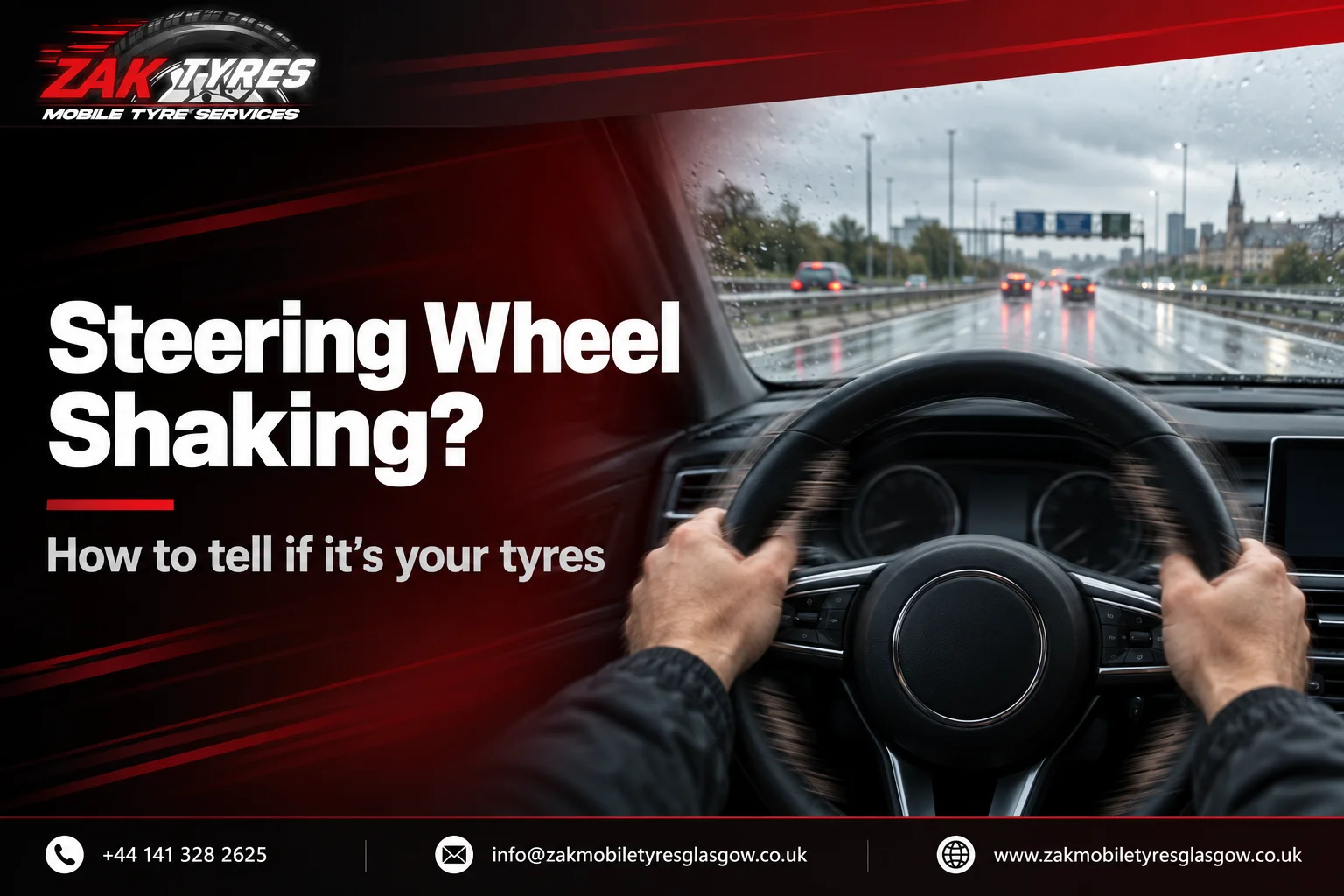
A shaking steering wheel or a car that pulls to one side is usually caused by the tyres or wheels, but not always. When the shake appears at a certain speed, often between 50 and 70mph, an unbalanced wheel is the most likely cause. When the shake appears only when you brake, the brakes are the more likely cause. When the car pulls, look first at tyre pressures and wheel alignment.
Some shakes are a warning to stop. A wobble that gets worse quickly, a new thumping noise, or a shake that appears at low speed can mean a damaged tyre or a loose wheel, and you should pull over safely and check before driving on.
This guide sorts the common symptoms by when they happen, explains the likely cause of each, tells you which ones a mobile tyre fitter can fix at the roadside and which need a garage, and shows you what to check yourself.
Disclaimer: This article is general information and is not a diagnosis. Steering, suspension and brake faults can cause similar symptoms. If the car feels unsafe, stop somewhere safe and have it inspected before driving further.
Start Here: When Does the Shaking Happen?
The timing of a shake is the best clue to its cause:
- Only at a certain speed (often 50 to 70mph): most likely wheel balance.
- All the time, getting worse: possibly tyre damage, a bent wheel or a loose wheel. Check straight away.
- Only when braking: most likely brake discs. A garage job.
- At low speed, with a wobble: possibly a damaged tyre, a bent wheel or loose wheel nuts. Stop and check.
- Straight after new tyres: usually balance, a wheel not seated correctly, or wheel nuts that need re-checking.
- The car pulls rather than shakes: usually pressures, alignment or a tyre problem.
Shaking at Motorway Speeds
If the steering wheel starts to shake at around 50mph, gets stronger by 60 or 70mph and sometimes fades again above that, the most likely cause is an unbalanced front wheel. If you feel it more through the seat or floor than the steering wheel, a rear wheel is more likely.
Wheels go out of balance when a balance weight falls off, often after a pothole or kerb strike, or as tyres wear. The fix is quick: the wheel is taken off, spun on a balancer and the weights corrected. Every tyre we fit is balanced on our van, and we can rebalance existing wheels at your home or work. Our guide to wheel balancing vs wheel alignment explains how balancing works.
Other causes of a speed-related shake include a bent wheel rim and cupped tyre wear, where dips form around the tread. Our guide to uneven tyre wear shows what cupping looks like.
Shaking That Gets Worse or Appears Suddenly
A shake that appears without warning, or gets worse over a few miles, needs attention now. Possible causes include:
- A bulge in the sidewall. An impact can break the tyre’s internal cords so the sidewall bulges out. A bulged tyre can fail suddenly and must be replaced.
- Tread separation. The tread starts to come away from the tyre’s body, causing a lumpy, rhythmic thump and vibration.
- A bent or cracked wheel after a hard pothole or kerb strike.
- Loose wheel nuts, especially after recent tyre or brake work.
- Something stuck to the tyre or wheel, such as a lump of mud or ice packed inside the rim in winter.
Pull over somewhere safe and look at each tyre, especially the sidewalls. If you see a bulge, a cut or the tread lifting, do not drive on it. Our roadside tyre assistance team can come to you. Our guide on pothole tyre damage in Glasgow shows what impact damage looks like.
Shaking Only When You Brake
If the steering wheel judders only when you press the brake, and especially when braking from higher speeds, the most likely cause is warped or unevenly worn brake discs. The tyres are not usually the cause. This is a job for a garage or a mobile mechanic, not a tyre fitter, and it should be checked soon, because worn brakes affect stopping distances.
A Wobble at Low Speed
A wobble you can see or feel at walking pace or in a car park is a different warning from a high-speed shake. It can point to:
- Loose wheel nuts
- A tyre that has slipped on the rim or has an internal break
- A badly bent wheel
- A worn wheel bearing or suspension joint
Stop as soon as it is safe and do not continue until the cause is found. If the wheel nuts are loose, the wheel can come off. If you have had tyres fitted in the last few days, contact whoever fitted them.
Shaking After New Tyres
A little vibration after a tyre change is usually easy to fix. Common reasons are:
- A balance weight that has come off or was not fitted correctly
- A tyre that has not seated evenly on the rim
- Wheel nuts that need re-checking after the first few miles
- A bent wheel that was not noticed before the new tyre went on
At Zak Mobile Tyres Glasgow, every wheel is balanced and the nuts torqued to the right figure before we leave. If you notice any vibration afterwards, call us and we will come back and check it.
When the Car Pulls to One Side
Pulling is a different symptom from shaking. Check these causes in order:
- Tyre pressures. A tyre lower than the one on the other side makes the car pull towards it. Check all four when the tyres are cold.
- A slow puncture. If one tyre keeps losing air, it may have a nail in it. A mobile puncture repair can usually fix it on the spot.
- Wheel alignment. After potholes, speed bumps or kerb strikes, the alignment can move and the car drifts to one side. Our wheel alignment service sets it back to the car maker’s figures, from £50.
- Mismatched tyres. Different brands or very different tread depths across an axle can make the car pull. Tyres on the same axle should match.
- A sticking brake. If one wheel feels hotter than the others after a drive, or there is a burning smell, a brake may be dragging. That needs a garage.
Remember that many roads are cambered to drain water, so a slight drift towards the kerb on some roads is normal. Test on a flat, straight road.

Why Glasgow Drivers See These Problems More Often
Local roads make steering shake and pulling more common than in many places. Freeze-thaw winters break up road surfaces and leave potholes with sharp edges, which knock off balance weights and bend rims. Tight tenement streets mean frequent kerb strikes while parking, which can move the wheel alignment or damage a sidewall. Speed bumps across residential streets and school zones load the steering and suspension every time they are taken too fast.
Cold weather adds to it. Tyre pressures drop as temperatures fall, and a tyre that is a few PSI lower than its partner on the same axle is enough to make the car drift. A monthly pressure check through the winter, and a quick look at the tyres after any hard impact, catches most of these problems before they turn into a vibration or a pull. Our 7-step winter tyre checks take about 15 minutes.
What You Can Check Yourself
Before you call anyone, a few quick checks narrow the cause down:
- Look at each tyre’s sidewall for bulges, cuts and cracks
- Check the tread for nails, screws and stones
- Compare the tread wear across each tyre, inner edge, centre and outer edge
- Check the tyre pressures against your handbook or door sticker
- Look at the wheels for dents or cracks on the rim
- Note when the shake happens: speed, braking or all the time
Send us a photo on WhatsApp if you are not sure what you are looking at. Our free Tyre Checker can also help you decide whether a tyre is safe to drive on.
Frequently Asked Questions
Why does my steering wheel shake at 60mph?
A shake that appears at around 50 to 70mph and sometimes fades at higher speeds is usually caused by an unbalanced front wheel. A lost balance weight, a bent rim or uneven tyre wear can all cause it. Having the wheels balanced usually fixes it.
Why does my steering wheel shake when I brake?
A shake that only happens when braking is most often caused by warped or unevenly worn brake discs, not the tyres. Have the brakes checked by a garage or mobile mechanic.
Is it safe to drive with a shaking steering wheel?
A mild shake at one speed is not usually an emergency, but it should be checked soon. A shake that gets worse, appears suddenly, or comes with a wobble or thumping noise can mean a damaged tyre or loose wheel, so stop somewhere safe and check before driving on.
Can bad tyres cause the car to pull to one side?
Yes. Low pressure in one tyre, a slow puncture, mismatched tyres on the same axle or uneven wear can all make a car pull. Poor wheel alignment is another common cause.
Can a mobile tyre fitter fix steering wheel shake?
If the cause is wheel balance, a damaged tyre or a puncture, yes. We can balance wheels, repair punctures and replace tyres at your home, work or the roadside. Brake and suspension faults need a garage or mobile mechanic.
Conclusion
A steering wheel shaking at speed usually means wheel balance; a shake under braking usually means brakes; pulling usually means pressures or alignment. A sudden shake, a wobble at low speed or a thumping noise is a reason to stop and check the tyres straight away.
Car shaking or pulling? Call 0141 328 2625 or WhatsApp 07553 352305. We check, balance, repair and replace tyres at your home, work or the roadside across Glasgow and Central Scotland, 24/7, with no call-out fee under 2km. You can also get a quick quote online.